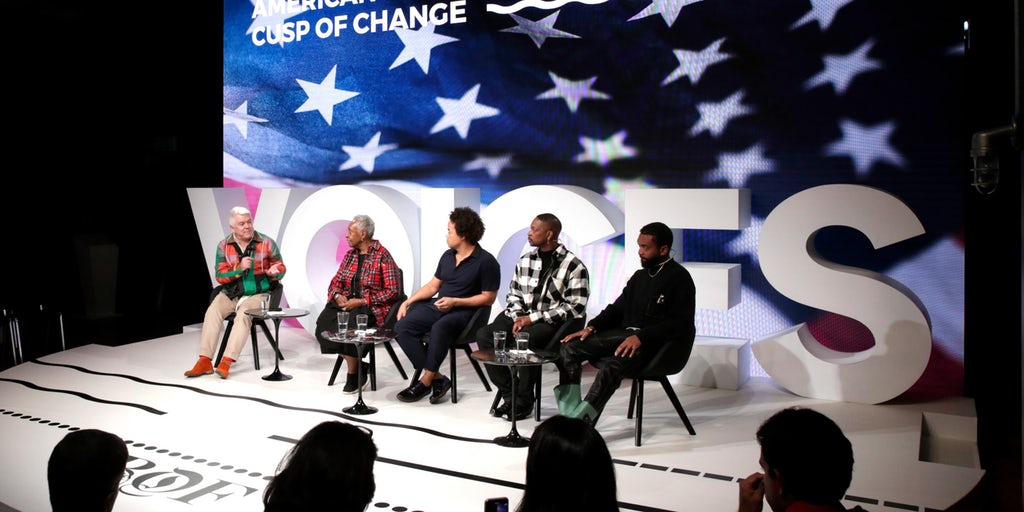
On November 29, black fashion industry insiders came together for a conversation on the diversity of the industry and whether American fashion is on the cusp of change, at Business of Fashion’s VOICES series. Designers Patrick Robinson, LaQuan Smith, and Kerby Jean-Raymond joined Bethann Hardison, former model and founder of Bethann Management modeling agency, to discuss the issues that black hopefuls face inside the fashion industry.
Wokeness is a current trend. We hear about it on podcasts, we read about it in magazines, see it in our favorite TV shows, and beyond. But the fashion industry had a moment of being “woke,” and reverted, according to Hardison. Back when she walked the catwalks of Paris, there was more inclusion of black models. And then it went away. Casting agents took over, and the look on the runway changed. And so went the fate of diversity in the industry in several aspects.
Jean-Raymond, who recently won the CFDA Vogue/Fashion Fund award for his label Pyer Moss, gave an anecdote of how he’d walked out of a “diversity” conference when he noticed that the conversation was centered on diversity and inclusion as being good for business. Robinson, who at one time was the chief designer at the Gap, acknowledged that there were times during his career that he felt like he was waved around as proof of diversity for brands when they lacked color in their C-Suites.
“Don’t label me as a black designer,” he said. “I’m black, but I’m also a designer.”
But with the rise of the social media influencer, designers have been able to take control of their own businesses. LaQuan Smith exploded on the fashion scene back in 2010 with the backing of Vogue magazine legend Andre Leon Talley. After his designs appeared in Rihanna’s “Rude Boy” video in 2009, he began a climb to household name fashion fame. Over the years, his eponymous label has retained a sexy aesthetic with a high fashion price tag, and a cult following among high profile celebrities including Kim Kardashian and Beyoncé. His ASOS Design x LaQuan Smith collection debuted last month with photos of several models, including plus size girls, in the clothes. Though he is but one example of black designers changing how they can find success in fashion (Smith never even went to design school), the publishing world has shown some progress in inclusion and diversity for its cover stars.
According to Fashionista.com’s annual magazine year in review, domestic magazine covers have increased their diversity by 17 percent from last year, showing that approximately 48% of 128 covers reviewed featured people of color. Amongst the magazines reviewed were Allure, Elle, Vogue and W Magazine—the books that black designers and models hope to be featured in to help their career’s flourish. And while it’s too early to see if “wokeness” has its days numbered, the hope remains that these tiny steps will begin the bigger march into making diversity and inclusion less of a trend, and more of an industry staple.
 Shalwah Evans